It’s a bright beautiful morning as I stand outside a local coffee roaster off the cobbled high street in the Sussex town of Lewes. It’s my first visit to this café which has been suggested to me by a friend who only recently moved back to the area from travelling abroad. Quite unassuming from the outside, I peer through the window where I immediately see a hustle and bustle of activity. Groups of friends, solo visitors, and couples occupy each table, and multiple floor spaces and laps are taken by four legged friends. As I step through the threshold, I find my senses are awash with smells and sounds of my new surroundings. My hearing adjusts, there is comfort in the blend of background noises, the mechanical grinding of beans, the steaming of milk and the chatter of conversation. I inhale deeply as the scent of coffee envelopes my nostrils. It’s like entering another world. A world which is oddly familiar for a first encounter.
Click the title to keep reading.
Tag Archives: social media
Not the Last Pandemic
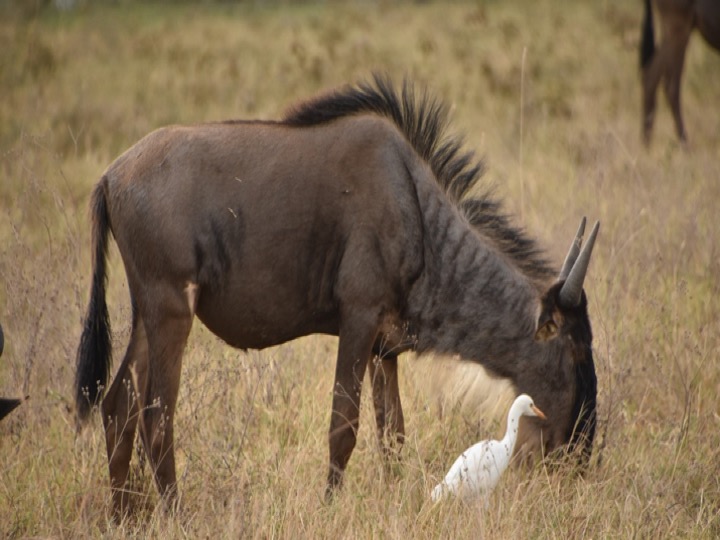
One researcher, one culture, one year. That is the traditional ideal for good ethnography (Randall et al., 2007). But how do you spend time in another culture when you can’t even leave your living room? When the COVID-19 pandemic struck I was preparing to travel to Kenya. Not for a year and not to write the traditional ethnography, but to conduct research for the new type of ethnography, a multispecies ethnography of a conservation encounter (Kiik, 2018; Moore, 2017). My research focuses on the ways that malignant catarrhal fever (a disease of wildebeest) affects Maasai livelihoods and conservation efforts. My time in Kenya would have revolved around interviewing local Maasai herders about their experiences with the disease and observing wildebeest (Connochaetes taurinus) to determine if Maasai persecution of them is changing their behavior, as is the case with other animals in human areas (Kioko et al., 2015; Ogutu et al., 2005; Schuette et al., 2013). However, when travel became impossible the staple methodologies behind my research also became impossible. In fact, the staple methodology, fieldwork, behind all anthropological research became impossible. So, what should we do? Should we sit in our ivory tower twiddling our thumbs and wait for the pandemic to pass? Should we then resume business as usual? What happens when the next pandemic strikes, as it certainly will?
Click the title to keep reading.
 Anthrozoology as Symbiotic Ethics