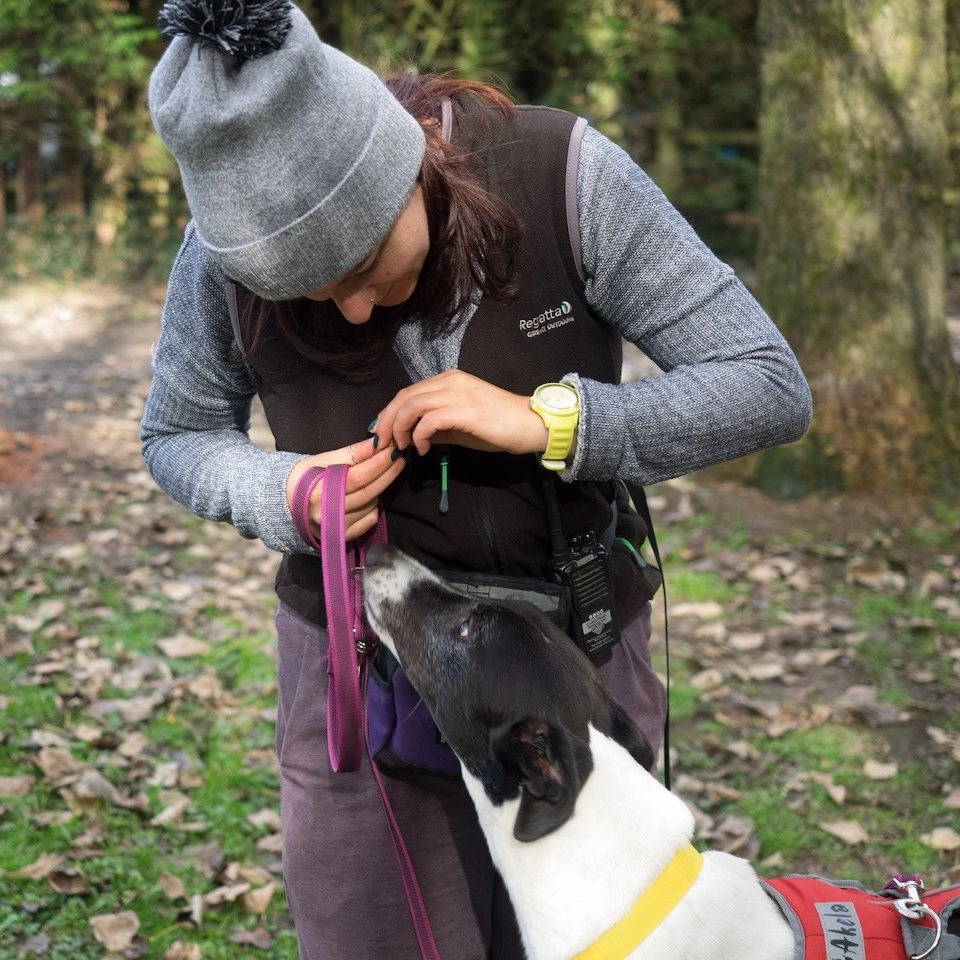
Image credit: Kerry Herbert
Kerry Herbert and Emily Stone
In “Critical Pet Studies?” Nast (2006) calls attention to how, since the 1990s, many persons living in post-industrial contexts have been financially and emotionally investing in ‘pets’ (especially dogs), profoundly affecting what is considered to be a socially appropriate object of love and affection.1 She suggested that the economic groundswell of pet markets and culture required a critical international analysis of the geographies and demographics involved. Although the last decade has produced an expansion of cross disciplinary interest in critically exploring dominant practices and relations within ‘pet-keeping’ (e.g. Hurn, 2012; Guenther, 2020; Redmalm, 2021; Weaver, 2021), nearly twenty years on, very few have engaged Nast’s call (see Nast 2015; 2018; 2020; 2021 for Nast’s more recent research in this area).
Critical Pet Studies provides a conceptual framework for identifying how, why, and where the ‘pet’-human relationship is changing. This blog entry is intended as a provocation to use the concept to think through the nature of these burgeoning financial and emotional investments in ‘pets.’ Moreover, how might the EASE notion of Symbiotic Ethics shape this thinking (Badman-King, 2021; EASE, 2017; Hurn and Stone, 2023). Our aim is to produce a special issue of the EASE Working Paper Series that responds to Nast’s call for Critical Pet Studies through this unique lens.
Critical Pet Studies
In her paper, Nast (2006) wonders how ‘pet love’ is made meaningful, asking:
What is the relationship that exists between the roles that pets are fulfilling in post-industrial contexts in the twenty first century and the global increase in alienation and inhumanity?
In particular her concerns address the manner through which a preoccupation with ‘pet keeping’ may orientate people away from broader systemic and structural issues of global inequalities, creating a kind of inertia towards matters of race, class, gender and other intersectionalities. According to Nast, ‘pet love’ manifests “… nested levels of fetishization” (2006: 902) within late capitalism, where ‘pets’ become both, something to purchase and to purchase for. Nast’s work is concerned less with the experiences of ‘pets’ themselves, than with the ways that pet ‘ownership’ allows the pet to become a screen onto which the ‘owner’s’ neurotic and narcissistic investments may be projected. For Nast, this projection occurs because ‘pets’ are more limited in their ability to object to how they are being treated as compared with other dependents, such as human children (2006: 901). Samantha Hurn (2012) describes a similar power differential across the species divide. Noting the ways that social relations between ‘pets’ and humans are influenced by capitalist market drivers (examples could include media trends and fluctuations in demand for different breed types), ‘pets’ become commodities due to the social profit they generate for the humans with whom they live. Describing these relations as ‘commodity fetishism’ (2012: 104), Hurn emphasises how this predominates in the same post-domestic societies underpinned by capitalist systems, with which Nast also takes issue.
In alignment with Hurn’s ethnographic work (see Hurn, 2018 for example), through which she asserts the scholarly importance of centring and considering a shared intersubjectivity of multispecies relations, David Redmalm’s (2021) empirical examination of the relations of power and control at play inside the ‘pet’-human relationships of his participants, is similarly relationally situated. Through spending time with humans and their ‘pets’, his paper examines what he describes as “the promises and pitfalls of pet keeping” (2021: 440), highlighting the paradoxical function that this social practice occupies in capitalist society. He asserts:
… pet keeping can challenge anthropocentrism and unsustainable consumption lifestyles, but it may also reinforce prevailing biopolitical logics, if it remains maintained within a secluded domestic or cultural sphere (2021: 440).
For Redmalm, then, a dichotomous tension exists inside the ‘home’ of the ‘pet’-human relationship. The relational aspects of living with ‘pets’ provides both the context and material to enable those humans to recognise other animals as sentient, minded beings, and it thus becomes the catalyst to adjust personal behaviour in accordance with such recognition. Yet at the same time, the opportunity for those same human-‘pet’ relations to produce a wider lens of insight onto broader injustices and intersectionalities is, paradoxically and frustratingly, disrupted by these relations when too narrow a focus is placed on living with ‘pets’.
Anthrozoology as Symbiotic Ethics and CPS
Set up in 2016, and noting the need for the broadly quantitative discipline of Anthrozoology to benefit from an ‘ethical intervention’, the EASE working group at the University of Exeter calls for a reframing of Anthrozoology as Symbiotic Ethics and a consequential de-centring of normatively anthropocentric worldviews which concern themselves only with human-orientated knowledge (EASE, 2017; Hurn and Stone, 2023: 3). Anthrozoology as Symbiotic Ethics prioritises the recognition that other animals are minded, active subjects; foregrounds the importance of qualitative and immersive approaches to the study of human entanglements with other animals; and emphasises the ethical dimensions of these entanglements. As such, it is well equipped to take up further interrogation of concerns associated with living with ‘pets’. An EASE approach examines systemic and structural concerns by foregrounding the predicament of other animals in any analysis – in this case, the otherthanhuman animals described as ‘pets’ – recognising them as active stakeholders in multispecies worlds, whilst also concerning ourselves with meaningful application and translation of knowledge to practice (EASE, 2017).
In Nast’s seminal work sketching out the features of a CPS, she asserts that:
a CPS would not involve detailed ethnographies of human pet relations in and of themselves; nor would it involve documenting the importance of pets in contemporary societies (2006: 902, our emphasis).
Whilst we seek to do neither of these things, our work is able to contribute to a CPS by bringing critical attention and analysis to the practices which may produce ‘pet love’. Drawing on qualitative methodologies to provide a depth of knowledge and understanding of what ‘pets’ mean and how their lives are lived, we seek to bring holistic insights of the context within which ‘pet loving’ manifestations and interactions occur.
Nast’s problematisation of ‘pet love’ tacitly suggests that there is too much looking at ‘pets’. Our contribution posits, if ‘pet love’ is a problem, what is this ‘pet love’ about? And what might a focus on the perspectives of the beings being loved (and in some instances, giving love themselves) contribute to the sub-discipline of CPS? A Symbiotic Ethics lens may facilitate this by delving more deeply into the ways in which ‘pets’ are socially and culturally constructed and oftentimes held up as the moral referent when making speciesist arguments about how certain animal-others are treated.
Addressing Nast’s central question of how ‘pet love’ is made meaningful, a CPS through a Symbolic Ethics lens may encourage the questioning of often taken-for-granted and broadly uncritiqued ‘pet’-human interactions and practices. For instance, this approach could examine the normalisation of a ‘pet’s’ place in a home, where this results in a commodification of otherthanhuman animals and leads to the creation of supply and demand chains that involve breeders, but also animal shelters and rescue groups. It could also enable the examination of the ‘pet’s’ anthropocentrically-coded role within these interactions, which bring about the shaping, manipulating and disciplining of other species in attempts to make them ‘fit’ with classist, racist, and gendered notions about ‘pets’ in homes, and whose home counts (e.g. Guenther, 2020; Weaver, 2021).
Taking this lens would also facilitate intersectional scrutiny of the inherent power relations within common ‘pet’ keeping practices which may include selective breeding, training, and animal rescuing. Furthermore, it could lead to critical engagement with the ways in which ‘pet love’ is enacted and mobilised to ‘fix’ emotional discontents, as opposed to motivating and holding space for social change and justice movements (for instance, sending former racing greyhounds in to ‘soothe’ stressed out university students, rather than demanding system change around fee structures, or holding institutions to account on the impacts of cultures of examinations which bring about these conditions in the first place).
References
Badman-King, A. (2021). Living-With Wisdom: Permaculture and Symbiotic Ethics. London: Routledge.
EASE. (2017). About us. https://sociology.exeter.ac.uk/research/ease/about/.
Guenther, K.M. (2020). The Lives and Deaths of Shelter Animals. Stanford: Stanford University Press.
Hurn, S. (2012). Humans and Other Animals: Cross-Cultural Perspectives on Human-Animal Interactions. London: Pluto Press.
Hurn, S. (2018). Encounters with dogs as an exercise in analyzing multi-species ethnography. In Sage Research Methods Datasets Part 1. SAGE Publications, Ltd. https://doi.org/10.4135/9781526440921.
Hurn, S., and Stone, E. (2023). EASE Working Paper Series Editors’ Introduction. In EASE Working Paper Series Issue 1, Emerging Voices: The Proceedings of Anthrozoology as International Practice (AIP) 2021 Conference. https://anthrozoologyassymbioticethics.wordpress.com/ease-working-paper-series-volume-1-emerging-voices/.
Nast, H.J. (2006). Critical Pet Studies? Antipode, 38(5): 894–906.
Nast, H.J. (2015). Pit bulls, slavery, and whiteness in the mid- to late- nineteenth century US: Geographical trajectories; primary sources. In Gillespie, K., and Collard, R-C. (eds). Critical Animal Geographies. New York: Routledge, pp.125-146.
Nast, H.J. (2018). For the love of life: coal mining and pit bull fighting in 19th century Great Britain. In Rutherford, S., and Wilcox. S. (eds). Historical Animal Geographies, London: Routledge, pp.275-293.
Nast, H.J. (2020). D for Dog. In Mawani, R., and Burton, A. (eds). Animalia: An anti-imperial bestiary for our times. Durham, NC: Duke University Press, pp.45-55.
Nast, H.J. (2021). Pets or meat?: A resource geography of dogs in China, from Chairman Mao (1949-1976) to the Pet Fair Asia Fashion Show, 2015-present. In Himley, M., Havice, E., and Valdivia, G. (eds). The Routledge Handbook of Critical Resources. London: Routledge, pp.152-166.
Redmalm, D. (2021). Discipline and puppies: the powers of pet keeping. International Journal of Sociology and Social Policy, 41(3/4), 440–454.
Weaver, H. (2021). Bad Dog: Pit Bull Politics and Multispecies Justice. Seattle: University of Washington Press.
Author Bios
Kerry Herbert
Kerry is an Anthrozoologist, PhD student at the University of Exeter, and ethical vegan whose work sits within the context of scholarly activism. Her advocacy predominantly focuses on helping former racing greyhounds to navigate new lives as companions and creating new narratives of care for these traumatised individuals (see Herbert, 2021). Kerry’s scholarly work calls for social change for greyhounds and is informed by her frontline experiences of living with, caring about, and advocating for this vulnerable population of domestic dogs.
Contact email: Klh230@exeter.ac.uk
Dr Emily Stone
Emily is a Postdoctoral Research Associate with the Exeter Anthrozoology as Symbiotic Ethics (EASE) working group. Emily completed her PhD in Anthrozoology at the University of Exeter in 2020. Her doctoral research was an ethnographic exploration of the cat fancy, or the breeding and exhibiting of pedigree cats (published as a monograph in 2022). Emily’s most recent research projects have focused on childhood experiences of companion animal loss, as well as the implications of the transition into care homes for older people and their companion animals (both funded by the Society for Companion Animal Studies), and a pilot project funded by the Culture and Animals Foundation exploring veterinary perspectives toward ethical pet foods.
Contact email: e.stone4@exeter.ac.uk
Twitter: @_ems_1
Website: https://sociology.exeter.ac.uk/staff/emily_stone/
- We acknowledge the inherent problems with this term and its widespread use to describe relations between humans and certain domesticated animals. Hurn notes the diversity of relationships that this term denotes and calls for greater attention to the power differentials at play, where…… “Pets can be companion animals, working animals and friends, mascots, accessories, mediators and victims of human control” (2012: 110). Here, we continue to use the term ‘pets’, although we indicate and acknowledge its status as a contested term for anthrozoology as symbiotic ethics, by denoting its use inside inverted commas. Furthermore, as our provocation for a Critical Pet Studies through a Symbiotic Ethics lens seeks to problematise ideologies which facilitate describing, thinking about and living with ‘pets’, it seems pertinent to continue to use this term, so as not to lose the potency of the problem we seek to position. ↩︎
 Anthrozoology as Symbiotic Ethics