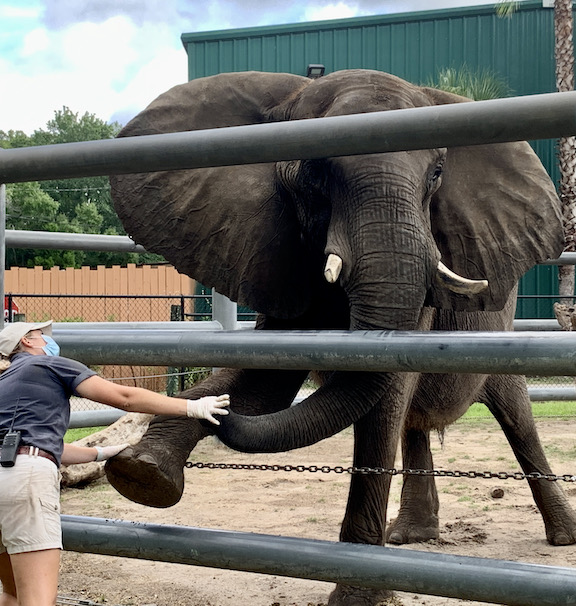
Figure 1: Elephant-caregiver interaction at Zoo Tampa in Florida. Image by A.M. Lacinak
Angi Millwood Lacinak, Anthrozoology PhD candidate, University of Exeter
Zoos are widely considered places of societal and environmental importance. While there is ongoing debate regarding the ethics of captivity (e.g., Gruen, 2014; Gray, 2017; DeGrazia, 2011, Donahue and Trump, 2006), most otherthanhuman animals (henceforth animals) who reside in zoos are captive bred (Gray, 2017) and are not viable for release. Therefore, efforts must focus on ensuring they experience the highest standards of care throughout their lives in zoological facilities. Zoo histories have been documented for more than four thousand years (Carr and Cohen, 2011; Mullan and Marvin, 1987; Braverman, 2013; Gray 2017; Norton et al., 2012; Hosey et al., 2009; Grazien, 2015). Over those millennia, the manner in which animals are managed by humans has evolved but the allure of experiencing wild animals in person remains unchanged. In fact, attendance at these cultural trans-species attractions continues to grow, as evidenced by the approximate 700 million visitors to zoos annually (WAZA, 2020; Gray, 2017). Over the course of such visits, zoo users are routinely presented with encounters involving zoo staff and resident animals. These animal-human interactions provide ideal opportunities for elevating patron knowledge, empathy, and conservation intent (Miller et al., 2018; Braverman, 2013; Carr and Cohen, 2011) as well as gauging zoo guests’ perceptions of the activities. Figure one illustrates such an interaction at Zoo Tampa in a paddock attached to the elephant (Loxodonta africana) barn, where guest encounters are held.
My Ph.D. thesis seeks to understand the perceptions that are formed during these anthrozoological activities regarding the animals’ (primarily elephants, including Elephas maximus) welfare and emotional states. This is largely an anthropocentric undertaking as my aim is not to determine the pachyderms’ actual emotional states and well-being but rather human visitors’ perceptions of such. This factor is significant for zoos as customer perceptions of animal welfare and ‘happiness’ directly affect consumer patronage. This, in turn, impacts the care afforded to those animals, as staffing, medical care, facilities, nutrition, and enrichment all require funding. Therefore, an understanding of zoo users’ perceptions ultimately contributes to animals’ well-being. More specifically, my thesis dissects parameters existent in all elephant learning sessions, namely what the animals are asked to do (the behaviours), what they are given in exchange for their efforts (the reinforcers) and the topic of discussion from the caregiver during the interaction (the messages).
The elephant-human interactions on display during these daily zoo activities are possible due to the relationships forged through reciprocal exchanges. During the course of learning sessions (a.k.a. training sessions) the human asks something of the elephant and the elephant receives something (on a variable ratio schedule of reinforcement) he or she desires in trade. Having worked in zoos for more than two decades, I can attest, however, that these relationships are not developed through edible bribes and are not attributed to formal training sessions alone. These elephant-caregiver relationships and bonds, frequently cited in academic literature as human-animal relationships (HARs) or bonds (HABs; see Hosey and Melfi, 2012, 2014 and 2015; Hosey et al., 2009 and 2018; Carlstead et al., 2019), require consistent histories of congenial interactions. One could argue that they require friendships. Like human-human friendships, these relationships rely on a variety of trust-building interactions. As a result, these zoological dyads become symbiotic, relying on one another and a shared understanding of the ‘other’s’ intentions and needs.
This leads to the query: what are the specific actions that take place during elephant-caregiver interactions in zoos that demonstrate exemplary welfare (positive physical state) and happiness (positive emotional or psychological states)? Though we cannot know an elephant’s inner emotional state any more than we can know other humans’ emotional states (de Waal, 2019), we can form educated guesses based on empathetic egomorphism (the process of empathising with an animal based on their ontogenetic history, culture and personal experiences; Milton, 2005) just as we would with our own species. According to Balcombe, there are body language clues that tend to consistently represent emotions across species divides, such as playfulness or avoidance (2007). Furthermore, there is now ample evidence that animals do feel a range of emotions (Bekoff, 2000; Skutch, 1996; Pool, 1998; Grandin, 2005; Douglas-Hamilton, et al., 2006; and Panksepp, 1998, among others). However, evidence also exists of humans’ inability to accurately interpret the body language (and by extension, the associated emotions) of other species (Bahlig-Pieren and Turner, 1999; Demirbas, 2016; Tami and Gallagher, 2009).
Through an understanding of visitors’ perceptions of the multi-faceted parameters that make up elephant-caregiver interactions in zoos, one can begin to construct an ideal guest demonstration that highlights the inter-species bonds on display. In doing so, zoos elevate the importance of these interactions in the daily responsibilities of the staff. For example, my study found that zoo visitors perceived that tactile contact from the caregiver to the elephants (petting/ scratching) was indicative of more emotionally satisfied and welfare positive elephants than food rewards. Furthermore, viewers discriminated between what they interpreted as perfunctory petting (such as scratching an elephant’s side) and intimate sincere tactile contact such as scratching inside an elephant’s ear or directly on the tongue. Figure 2 illustrates an intimate tongue scratch. To make this determination, participants largely drew on the elephants’ body language, referring to closed eyes, a wiggling tongue, puffed cheeks, etc.
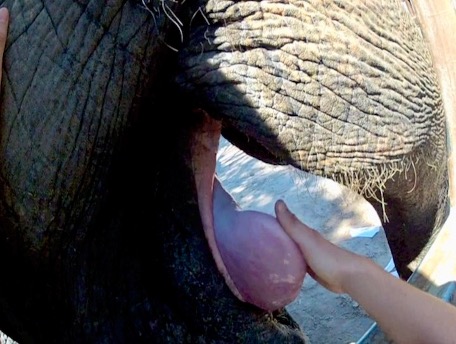
Figure 2: Elephant receives a tongue-scratch from her caregiver at Busch Gardens in Tampa Bay. Image by A.M. Lacinak
Respondents to my study also felt that the elephants demonstrating some autonomy or decision-making during the elephant-caregiver interactions reflected elevated welfare and emotional states. An example of this included an elephant playing with or bathing himself with water from his drinking trough (though the water was provided directly from the caregiver via a hose; see Figure 3). Another example took place during a mixed-species research study at the Palm Beach Zoo and Conservation Society (included in my thesis to provide humans’ perceptions of ‘other’ animals in comparison to those of elephants) when a female tiger (Panthera tigris jacksoni) suddenly bolted away from her caregiver to chase a wild ibis (Eudocimus albus). These types of activities were interpreted by zoo guests as mentally stimulating for the animals involved and were associated with happiness.
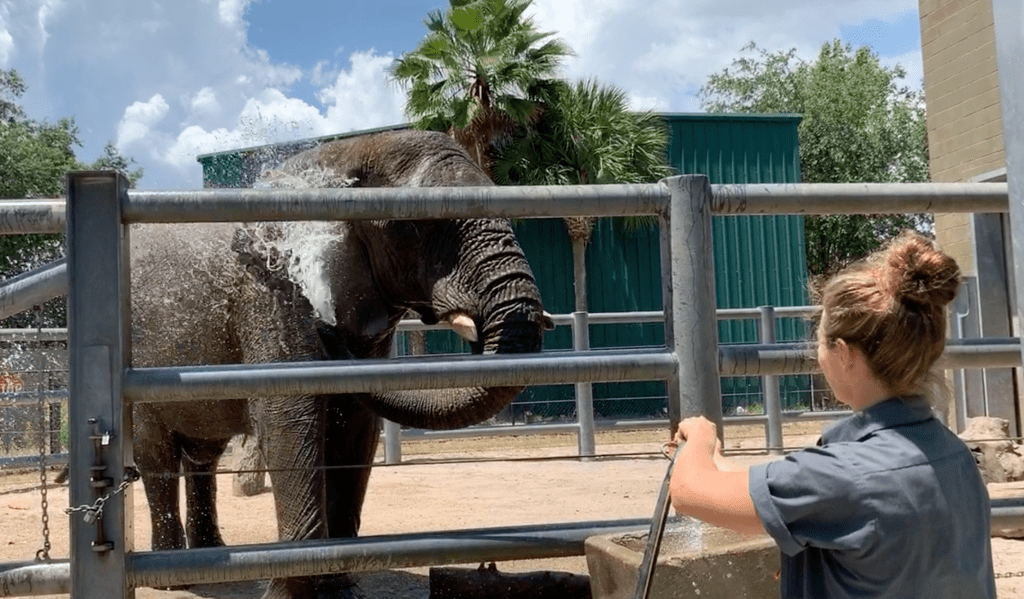
Figure 3: Elephant Sdudla splashes himself with water. Image by A.M. Lacinak
My research also revealed activities associated with depleted emotional states. Concern was expressed by participants regarding husbandry behaviours such as toenail filing and placement of anklets (both required behaviours for AZA accreditation; see AZA, 2020: 59). Though there was some uneasiness about the elephants’ level of comfort during these procedures, respondents largely felt that they indicated a high level of trust with the caregiver and recognised the benefit to the animal of such actions.
In seeking to determine zoo guest perceptions of elephants’ emotional states and welfare, I hope to provide actionable recommendations to zoos with multifarious goals. First, it is important that zoos understand that their guests largely believe that zoo animals have emotions similar to those of their domesticated companion animals (a finding of my research) and are therefore forming opinions of zoo animals’ emotional states and correlated welfare through the interactions that they observe in the zoo. For the sake of self-preservation, this should encourage zoos to impart the best possible perception to zoo visitors. My goal, however, extends beyond the front gates. In highlighting the importance of elephant-caregiver bonds (exceptional relationships), I hope to bolster support for positive, meaningful, and frequent interactions between zoo staff and their residents. I believe this to elevate zoo patronage (which funds conservation of wild animals and provides for the needs of zoo residents and staff), but also places the appropriate importance on the emotional well-being of zoo animals so that they may thrive in the environments which are shared with their humans.
Author Bio:
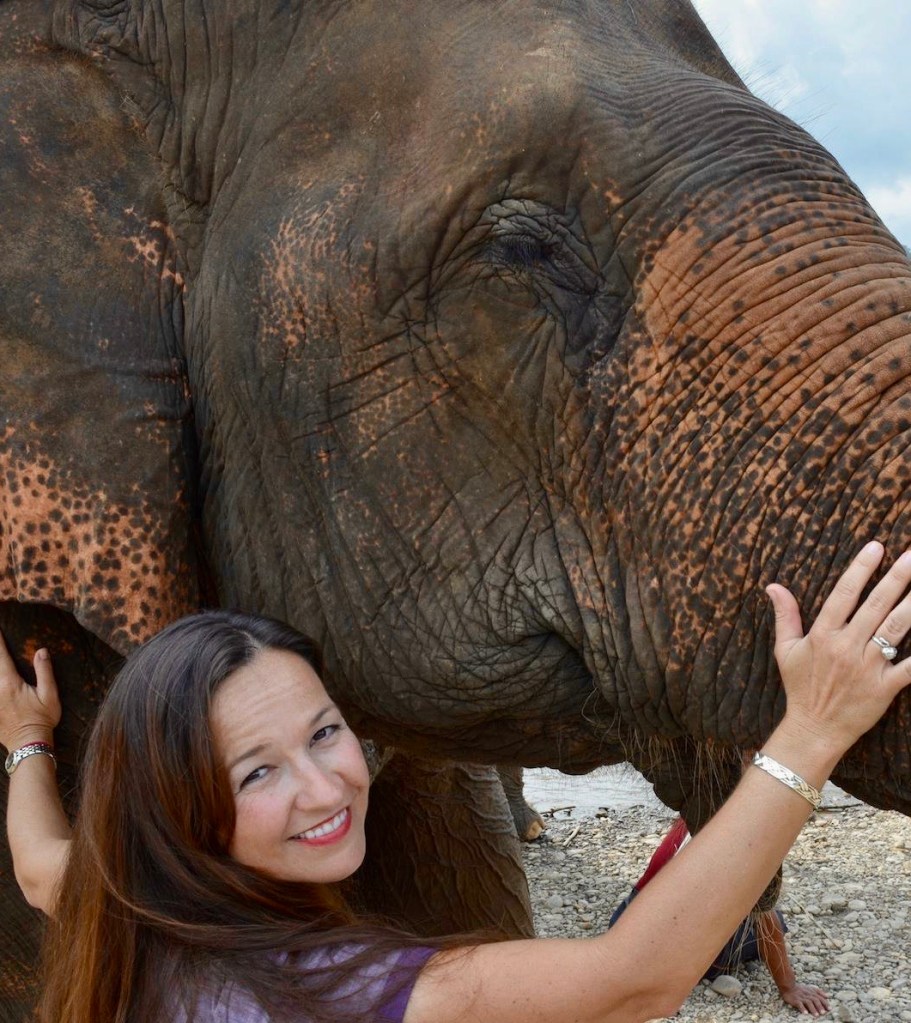
Angi is a PhD Anthrozoology researcher at the University of Exeter. She has worked in zoos and aquariums for more than 25 years and is the founder of an international animal welfare and behavior consulting firm, Precision Behavior.
To learn more, visit Angi’s Exeter student profile at: https://socialsciences.exeter.ac.uk/ease/people/angimillwoodlacinak/ and her business website: https://www.precisionbehavior.com.
References:
AZA. (2020b) The accreditation standards & related policies: 2021 [online] Available at: https://assets.speakcdn.com/assets/2332/aza-accreditation-standards.pdf [Accessed 20 December 2020].
Bahlig-Pieren, Z. and Turner, D.C. (1999) Anthropomorphic interpretations and ethological descriptions of dog and cat behavior by lay people, Anthrozoös, 12(4): 205-210.
Bekoff, M. (2000) Animal emotions: exploring passionate natures, BioScience, 50(10): 861-870.
Braverman, I. (2013) Zooland: the institution of captivity, Stanford, CA, Stanford University Press.
Carlstead, K., Paris, S. and Brown, J.L. (2019) Good keeper-elephant relationships in North American zoos are mutually beneficial to welfare, Applied Animal Behaviour Science, 211: 103-111.
Carr, N. and Cohen, S. (2011) The public face of zoos: images of entertainment, education, and conservation, Anthrozoos, 24(2): 175-189, DOI: 10.2752/175303711X12998632257620.
DeGrazia, D. (2011) The ethics of confining animals: from farms to zoos to human homes, in Beauchamp, T. and Frey, R.G. eds. (2011) The Oxford handbook of animal ethics, Oxford, Oxford University Press: 738-768.
Demirbas, Y.S., Ozturk, H., Emre, B., Kockaya, M., Ozvardar, T. and Scott, A. (2016) Adults’ ability to interpret canine body language during a dog-child interaction, Anthrozoös, 29(4): 581-596.
De Waal, F. (2019) Mama’s last hug: animal emotions and what they tell us about ourselves, New York, W.W. Norton & Company.
Donahue, J. and Trump, E. (2006) The politics of zoos: exotic animals and their protectors, Dekalb, IL, Northern Illinois University Press.
Douglas-Hamilton, I., Bhalla, S., Wittemyer, G. and Vollrath, F. (2006) Behavioural reactions of elephants towards a dying and deceased matriarch, Applied Animal Behaviour Science, 100: 87-102.
Grandin, T. and Johnson, K. (2005) Animals in translation: using the mysteries of autism to decode animal behavior, New York, Scribner.
Gray, J. (2017) Zoo ethics: the challenges of compassionate conservation, Victoria, CSIRO Publishing.
Grazian, G. (2015) American zoo: a sociological safari, Princeton, NJ, Princeton University Press.
Gruen, L. ed. (2014) The ethics of captivity, Oxford, Oxford University Press.
Hosey, G., Birke, L., Shaw, W.S. and Melfi, V. (2018) Measuring the strength of human-animal bonds in zoos, Antrhozoös, 31(3): 273-281.
Hosey, G. and Melfi, V. (2012) Human-animal bonds between zoo professionals and the animals in their care, Zoo Biology, 31: 13-26.
Hosey, G. and Melfi, V. (2014) Human-animal interactions, relationships and bonds: a review and analysis of the literature, International Journal of Comparative Psychology, 27(1): 117-142.
Hosey, G. and Melfi, V. (2015) Are we ignoring neutral and negative human-animal relationships in zoos? Zoo Biology, 9999: 1-8.
Hosey, G., Melfi, V. and Pankhurst, S. (2009) Zoo animals: behaviour, management, and welfare, Oxford, Oxford University Press.
Miller, L.J., Luebke, J.F., Matiasek, J. (2018) Viewing African and Asian elephants at accredited zoological institutions: conservation intent and perceptions of animal welfare, Zoo Biology, 37: 466-477.
Milton, K. (2005) Anthropomorphism or egomorphism? The perception of non-human persons by human ones, in Knight, J. ed. (2005) Animals in person: cultural perspectives on human-animal intimacies, New York: Berg: 255-271.
Mullan, B. and Marvin, G. (1987) Zoo culture, London, Butler and Tanner Ltd.
Norton, B.G., Hutchins, M., Maple, T. and Stevens, E. (2012) Ethics on the ark: zoos, animal welfare, and wildlife conservation, Smithsonian Institution.
Panksepp, J. (1998) Affective neuroscience: the foundations of human and animal emotions, New York, Oxford University Press.
Poole, J.H. (1998) An exploration of a commonality between ourselves and elephants, Etica & Animali, 9: 85-110.
Skutch, A. (1996) The minds of birds, College Station, Texas, Texas A&M University Press.
Tami, G. and Gallagher, A. (2009) Description of the behaviour of the domestic dog (Canis familiaris) by experienced and inexperienced people, Applied Animal Behaviour Science, 120: 159-169.
WAZA (World Association of Zoos and Aquariums) (2020) Home page [online]. Available at: www.waza.org [Accessed 26 February 2020].
 Anthrozoology as Symbiotic Ethics