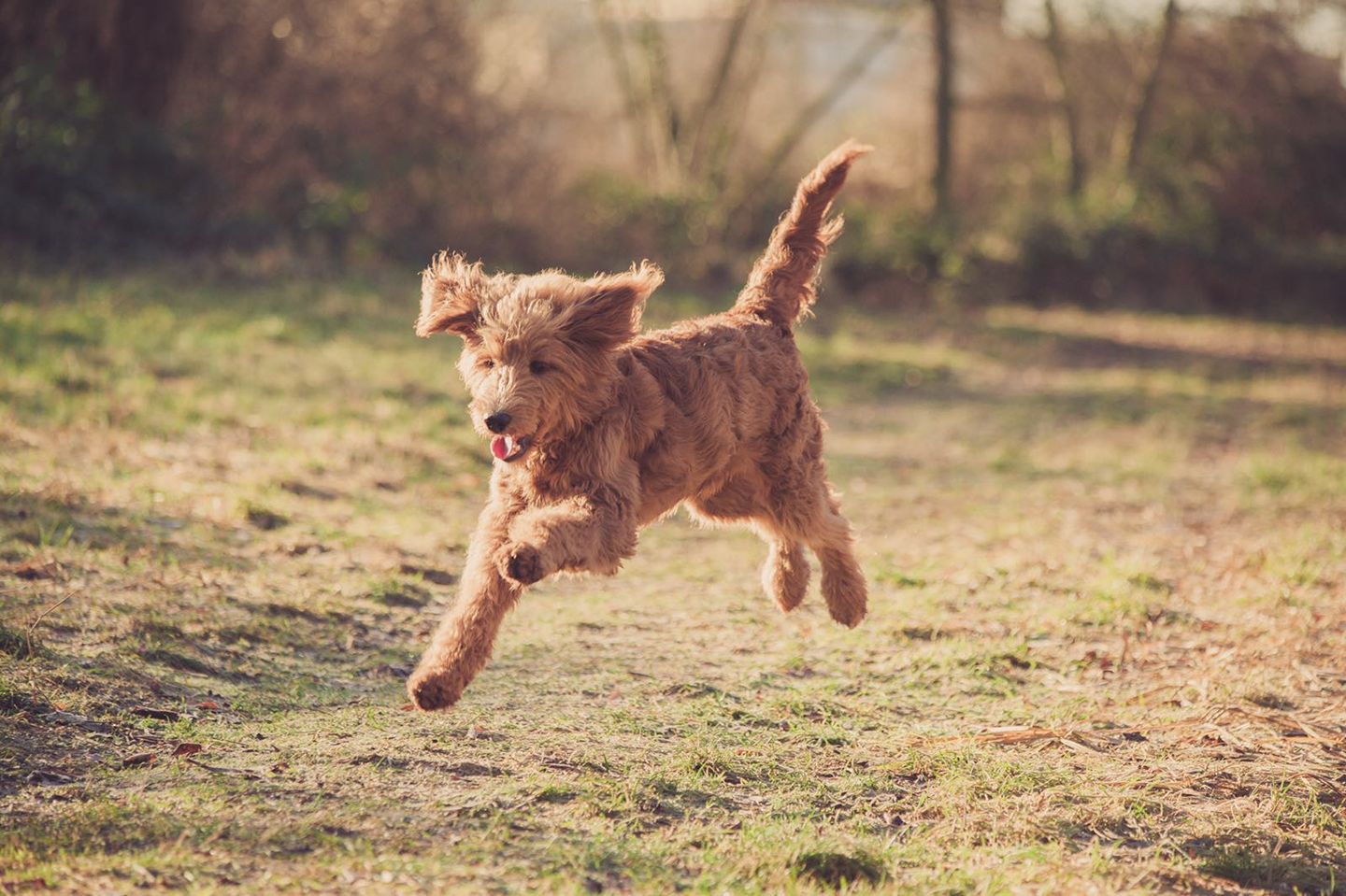
Inka enjoying the first sun rays of spring. Copyright for image: Pfotenpiloten
Tiamat Warda, Anthrozoology PhD candidate, University of Exeter
A few months into 2020, governments internationally introduced varying degrees of lockdowns and social distancing to combat the spread of the SAR-CoV-2 virus (Gollwitzer et al. 2020). Seemingly overnight, PhD candidates were faced with entirely redesigning their data collection process, navigating through a cloud of urgency and uncertainty (Roy and Uekusa, 2020: 384). I wish to discuss some of the challenges of conducting virtual, symbiotic ethics research in pandemic environments and, without wishing to sound distasteful, some potential “silver linings” found in doing so. I began a PhD in anthrozoology in January of 2020, which defines the emotional labour of guide dogs and their instructors at Irish Guide Dogs for the Blind (also known as GDMIs). When referring to emotional labour, I refer to the management of feelings to portray professional demeanours in work-related interactions (Hochschild, 1979; 1983). This became a challenge, as I am living in Germany with interlocutors based in Ireland. Research concerning trans-species work, as well as emotion management, is often explored through participant observation. Therefore, this research, an intersection of both, found itself in a unique position when placed under travel restrictions and social distancing measures. The pandemic ushered forward questions of how multispecies ethnographies can be approached in posthuman, pandemic, and post-pandemic environments. Beyond the travel restrictions, this resulted from the jolt to the global population to seek alternative approaches to many facets of our lives. This presented me with an opportunity to re-evaluate my initial design. The first year, during which I had aimed to travel to Ireland and complete the fieldwork, was instead spent in isolation: re-imagining and writing the methods repeatedly.
Online alternatives might conflict efforts to create a relaxed environment and relationship of trust between other researchers and interlocutors (Favilla and Pita, 2020: 232). However, I was privileged to relate to the GDMIs, and they to me, as an interlocutor explained:
It’s always a pleasure to talk with someone passionate and I see a lot of passion in you. … And every time I say something, or you say something, the only thing we have in our mind is, [gives a “knowing look”] “ah, I know what you mean”. Because we experience the same thing and same difficulties, and it makes us close to each other. Even in the difficult time [sic and hereafter]: “I know what you did, it was difficult”. It bring solidarity and I like that. … Because this job is so much in our life and you have the same job and you have the same experience, so you are closer to each other.
This shared “knowing look” allowed for conversations around emotional topics to flow with relative ease between human interlocutors. However, it highlights an imbalance in communication, and therefore representation, across species, as well as for researchers without insider knowledge and experience. Nevertheless, research concerning emotion management, conducted during a time of intensified emotions for most of the population, when done empathetically, can be a “… once-in-a-lifetime opportunity …” (Roy and Uekusa, 2020: 384). The heightened emotions on a global level offered rich insight into the emotional lives of interlocutors. Despite stemming from an incredibly challenging time, it acted as another slight “silver lining” when speaking to interlocutors about their feelings concerning emotional exchanges.
Bringing in the canines, however, proved challenging. I feared an entirely virtual approach would unnecessarily drown out their narratives – conflicted on how best to approach, “… ethics of ‘voice’, the inherent power that is carried by those who speak on behalf of and for Others” (Hamilton and Taylor, 2017: 57). Extra emphasis will need to be placed on the limited and blurred perspective we attempt to gain of other animals – carefully and humbly making any claims (Blattner et al., 2020: 5). I considered three alternative methods to accompany semi-structured interviews and an autoethnography. These involved evaluations of film footage of the canines by both the GDMI interlocutors and myself through coding (see for example Bekoff, 1995: 422; Horowitz and Hecht, 2016: 781), group discussions with the GDMIs (for an example of a group discussion concerning guide dogs, see Lloyd et al., 2009), as well as surveys (see for example Moy and Murphy, 2016). However, at best, this would have concluded that the canines were performing emotional labour while filmed – data which was rather unstable and not greatly impactful or effective in bringing in the canines’ narrative. The evaluation of feelings, especially across species, was limited by purely virtual methods. Their changed behaviour could equally have stemmed from any number of stressors rather than performing emotional labour which is generally a taught skill. I needed to delve even deeper into the quality and analysis of discussions with interlocutors followed by an extended, in-depth discourse.
It seemed common during 2020 to think critically and nostalgically of our interactions and relationships with humans and other animals – both those we are close to, and our extended trans-species family. In the end, I decided to utilise autobiographical reflections on my career as a GDMI to form a six year-long multispecies autoethnography, combined with interviews with a wide scope of staff at Irish Guide Dogs for the Blind, external professionals, academics, and individuals living with guide dogs as my methods. Roy and Uekusa (2020: 384) proposed that autoethnographies can be a fruitful alternative to fieldwork during the pandemic to “… study society through ourselves”. The rich insight offered by interlocutors during our conversations, blended with autoethnographic vignettes, offered a well-rounded palette, considering the circumstances. Extra care was taken to consider the guide dog interlocutors empathetically and egomorphically – in other words, as beings “like me” rather than “human-like” (see Hurn, 2012; Milton 2005).
Despite the challenges, outcomes have the potential to benefit guide dogs. The focus placed on canine-centric questions nudged the interview process itself to act as a “resistant intervention” (Sutton, 2020: 11; Strega, 2005). Multiple interlocutors expressed that our conversation had caused them to consider and question their work practice and relationship with their canine colleagues in ways that they had not during their careers which ranged between ten and forty years. Some such comments made by interlocutors were:
… Some things I’m going to be thinking about now, particularly with the emotion of the dog that I’ll be thinking, “I wonder…”. That’s such an interesting idea. So, it’s actually very helpful.
I’ve never thought about it like that. The fact that we’ve been focusing strongly on emotional reactions in different environments. …. I would never have considered it before.
It’s really interesting to actually think about it … It’s not something I thought about before. … And a couple of the questions do get me thinking more about things, particularly around the dog emotion side of it, because I don’t think we really understand that at all: To what extent they recognize stuff, or they feel stuff and whether they have the same emotions as us or different ones.
Considering the interviews took place at the end of 2020 and beginning of 2021, such reflection may have been intensified by the nine months to one year spent in isolation – a time when the global population was, to varying degrees, questioning most aspects of their lives and interactions with others. Generally, it was a rather emotional year which perhaps nudged most of us toward deeper contemplation on behalf of nonhuman animal emotions, as well as our own, and ways of coping with and managing these. Such conversations can aide symbiotic ethics research. In this case, it could challenge norms in both practices and mindsets within the guide dog sector in a manner with which it might not have been able to during in-person fieldwork when interlocutors may have been more distracted by their daily work-lives. As Martino and Lindsay (2020: 3) observe, especially research conducted during this pandemic embody an “… urgency to acknowledge the interdependence of humans, nonhumans, and our shared environment and lives”. Although the pandemic strained the ability to bring in the canines as I had initially aimed to, perhaps conducting symbiotic ethics research during this time acted as a unique opportunity for the interviews themselves to act as resistant interventions by supporting interlocutors to reassess their perceptions of and work-lives with their canine co-workers.
Author bio:
Tiamat Warda is currently a PhD candidate in Anthrozoology at the University of Exeter and part of the Exeter Anthrozoology as Symbiotic Ethics (EASE) working group. After working as a guide dog instructor for six years, Tiamat received an MA in Anthrozoology from the University of Exeter in 2019. Her PhD thesis aims to define and analyse emotional labour in relationships between guide dogs and their instructors. It contributes to anthrozoological research as a form of interspecies solidarity and supports a movement toward humane labour. Tiamat’s research interests include interspecies collaboration and assistance, animal labour studies, and care work.
Contact email: tw445@exeter.ac.uk
Personal website: www.tiamatwarda.com/en
Twitter: @tiamatwarda
References:
Bekoff, M. (1995). Play Signals as Punctuation: The Structure of Social Play in Canids. Behaviour, 132, pp.419–29.
Blattner, C., Donaldson, S., and Wilcox, R. (2020). Animal Agency in Community: A Political Multispecies Ethnography of VINE Sanctuary. Politics and Animals, 6, pp.1–22. www.politicsandanimals.org.
Favilla, K., and Pita, T. (2020). ‘When Will Fieldwork Open up Again?’ Beginning a Project in Pandemic Times, Fennia – International Journal of Geography, 198(1–2), pp.230–33. https://doi.org/10.11143/fennia.99203.
Gollwitzer, M., Platzer, C., Zwarg, C., and Göritz, A.S. (2020). Public Acceptance of Covid-19 Lockdown Scenarios. International Journal of Psychology.
Góralska, M. (2020). Anthropology from Home Advice on Digital Ethnography for the Pandemic Times. Anthropology in Action, 27(1), pp.46–52. https://doi.org/10.3167/AIA.2020.270105.
Grandey, A.A., Diefendorff, J., and Rupp, D.E. eds. (2013). Emotional Labor in the 21st Century: Diverse Perspectives on Emotion Regulation at Work. New York, NY: Routledge.
Hamilton, L., and Taylor, N. (2017). Ethnography after Humanism: Power, Politics and Method in Multi-Species Research. London, UK: Palgrave Macmillan. https://doi.org/10.1057/978-1-137-53933-5.
Horowitz, A., and Hecht, J. (2016). Examining Dog–Human Play: The Characteristics, Affect, and Vocalizations of a Unique Interspecific Interaction. Animal Cognition 19(July), pp.779–788. https://doi.org/10.1007/s10071-016-0976-3.
Hurn, S. (2012) Humans and Other Animals: Cross-Cultural Perspectives on Human-Animal Interactions. London, UK: Pluto Press.
Martino, A.S., and Lindsay, S.M. (2020). Introduction: The Intersections of Critical Disability Studies and Critical Animal Studies. Canadian Journal of Disability Studies, 9(2), pp.1–9. www.cjds.uwaterloo.
Milton, K. (2005). Anthropomorphism or Egomorphism? The Perception of Non-Human Persons by Human Ones. In Animals in Person: Cultural Perspectives on Human–Animal Intimacies, edited by J. Knight, 255–271. New York, NY: Berg.
Roy, R., and Uekusa, S. (2020). Collaborative Autoethnography: ‘Self-Reflection’ as a Timely Alternative Research Approach during the Global Pandemic. Qualitative Research Journal, 20(4), pp.383–392. https://doi.org/10.1108/QRJ-06-2020-0054.
Strega, S. (2005). The View from the Poststructural Margins: Epistemology and Methodology Resistance. In Research As Resistance: Critical, Indigenous and Anti-Oppressive Approaches, edited by L. Brown and S. Strega, 199–235. Toronto, Canada: Canadian Scholars’ Press Inc.
Sutton, Z. (2020). Researching towards a Critically Posthumanist Future: On the Political ‘Doing’ of Critical Research for Companion Animal Liberation. International Journal of Sociology and Social Policy ahead-of-p (ahead-of-print), pp.1–15. https://doi.org/10.1108/IJSSP-01-2020-0015.
 Anthrozoology as Symbiotic Ethics